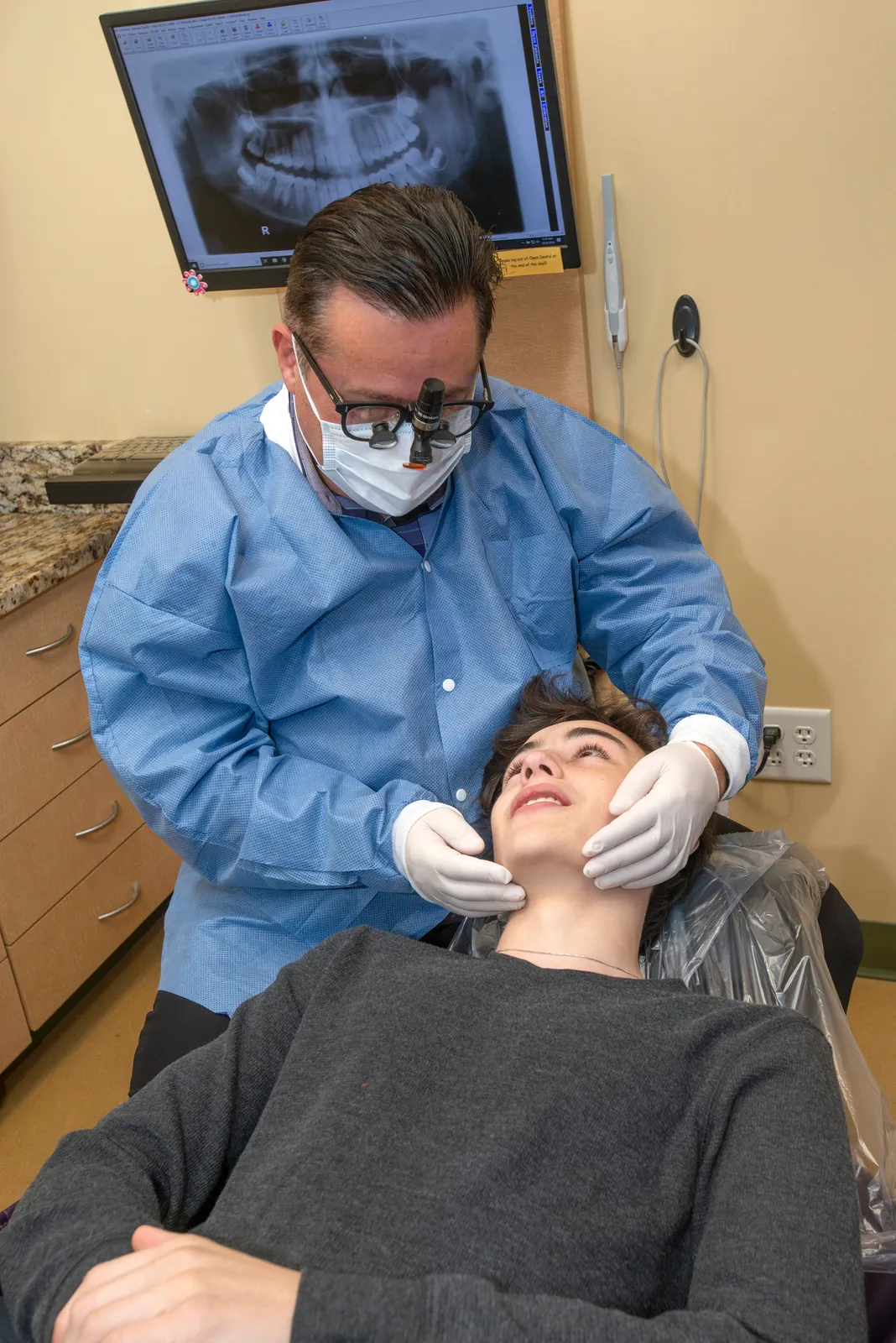
A dental emergency can happen without warning. You may wake up with a severe toothache, break a tooth while eating, lose a crown before an important event, or experience a mouth injury during sports.
In those moments, it is not always easy to know whether you need immediate treatment or whether the problem can wait for a regular appointment.
A dental emergency generally involves pain, infection, bleeding, trauma, or damage that requires prompt attention to protect your health, relieve significant discomfort, or improve the chance of saving a tooth. Severe dental pain, localized infection with swelling, and certain tooth fractures are among the conditions recognized as requiring urgent dental care.
At Gendler Dental Center, we help patients from Hopkins, Minnetonka, St. Louis Park, and surrounding west metro communities determine how quickly they should be seen and what to do before arriving at our office.
What Is Considered a Dental Emergency?
A dental emergency is a problem involving your teeth, gums, mouth, jaw, or dental restoration that needs prompt professional evaluation.
Some emergencies are obvious, such as a permanent tooth that has been knocked out. Others may seem less urgent at first but can become more serious if treatment is delayed.
You should contact a dentist promptly when you experience:
- Severe or persistent tooth pain
- Swelling in your gums, face, or jaw
- A knocked-out permanent tooth
- A loose or displaced permanent tooth
- A broken, cracked, or severely chipped tooth
- Uncontrolled bleeding from the mouth
- Signs of a dental infection or abscess
- An injury involving the teeth, lips, tongue, gums, or jaw
- A lost restoration that causes substantial pain or exposes the tooth
- A dental appliance or restoration that is causing injury
Pain is not the only measure of urgency. Some dental injuries require immediate attention even when discomfort is initially mild.
Common Dental Emergencies
Severe Toothache
A toothache can have several causes, including decay, a cracked tooth, an inflamed dental nerve, infection, gum disease, or food trapped around a tooth.
Contact a dentist promptly when pain is:
- Severe
- Persistent
- Throbbing
- Interfering with sleep
- Painful when biting
- Accompanied by swelling, fever, drainage, or a bad taste
Pain medication may temporarily reduce symptoms, but it does not treat the underlying cause.
Dental Abscess or Infection
A dental abscess is a pocket of infection that may form around a tooth or in the gums.
Possible warning signs include:
- Persistent or throbbing pain
- Gum, facial, or jaw swelling
- Tenderness when chewing
- A bump on the gums
- Pus or drainage
- A foul taste
- Fever or feeling unwell
Dental pain and swelling often require treatment directed at the source of the problem. Antibiotics alone are not a substitute for necessary dental procedures in many localized dental conditions.
Do not wait for an abscess to rupture or for the pain to disappear. Reduced pain does not necessarily mean the infection has resolved.
Knocked-Out Permanent Tooth
A knocked-out permanent tooth is one of the most time-sensitive dental emergencies.
Handle the tooth by the crown—the white portion normally visible in the mouth—not by the root.
When possible:
- Locate the tooth.
- Pick it up by the crown.
- If it is dirty, rinse it gently without scrubbing.
- Do not remove attached tissue.
- Try to place it back into the socket if this can be done safely.
- If reinsertion is not possible, keep the tooth moist.
- Call a dentist and seek treatment immediately.
The American Dental Association advises keeping a knocked-out permanent tooth moist at all times. It may be held in the socket, placed in milk, or stored in an ADA-accepted tooth-preservation product while traveling to the dentist.
Do not wrap the tooth in a dry tissue or allow it to dry out.
Knocked-Out Baby Tooth
Do not attempt to place a knocked-out primary, or baby, tooth back into its socket. Reinserting it may damage the developing permanent tooth underneath.
Contact your child’s dentist promptly for instructions and an evaluation. Injuries to primary teeth can also affect nearby tissues or the developing permanent teeth.
Cracked or Broken Tooth
A crack or fracture may expose the inner layers of a tooth, damage the dental nerve, or allow bacteria to enter.
Until you can see a dentist:
- Rinse gently with warm water.
- Save any broken pieces you can find.
- Apply a cold compress outside the face if swelling is present.
- Avoid chewing with the damaged tooth.
- Do not place aspirin directly on the tooth or gums.
The ADA recommends rinsing the mouth and applying a cold compress to the face after a cracked tooth injury.
Even a painless crack should be evaluated. Some fractures worsen with biting pressure or temperature changes.
Chipped Tooth
A small chip without pain may not require treatment within the hour, but you should still call the dental office for guidance.
A larger chip may be urgent when:
- The tooth is painful or sensitive.
- A sharp edge is cutting your tongue or cheek.
- The inner tooth appears exposed.
- The tooth was damaged by a significant impact.
- The chip extends below the gumline.
Save the broken fragment if possible and bring it to your appointment.
Loose or Displaced Permanent Tooth
A permanent tooth that has been pushed sideways, inward, outward, or partially out of its socket requires urgent evaluation.
Do not force it back into place. Avoid biting on it and call a dentist immediately. Prompt treatment may improve the chance of stabilizing and preserving the tooth.
Lost Filling
A lost filling may leave part of the tooth vulnerable to sensitivity, fracture, or further decay.
Call the dentist and avoid chewing on that side. Keep the area clean, but do not place household glue or non-dental materials inside the tooth.
A lost filling may be more urgent when it is accompanied by:
- Significant pain
- Swelling
- A sharp or broken tooth
- Difficulty eating
- Exposure of deeper tooth structure
Lost or Loose Crown
If a dental crown comes off:
- Save the crown.
- Rinse it gently.
- Keep the exposed tooth clean.
- Avoid chewing hard or sticky foods on that side.
- Call the dental office for instructions.
Do not use superglue or another household adhesive. A dentist will need to determine whether the crown can be recemented or whether the tooth or restoration needs additional treatment.
Broken Denture, Bridge, or Implant Restoration
Damage to a denture, bridge, implant crown, or other restoration may not always constitute a same-hour emergency, but it should be evaluated promptly when it affects eating, speech, appearance, or the surrounding tissues.
Stop wearing a removable appliance if it is broken, unstable, or creating sores. Do not attempt to repair it with household glue or a do-it-yourself kit unless specifically directed by a dental professional.
Pain, swelling, implant movement, or trauma around an implant warrants more urgent attention.
Broken Braces or Orthodontic Wires
A loose bracket may often wait for guidance from the dental or orthodontic office, but a sharp wire that is cutting the cheek or gums should be addressed promptly.
Until your appointment:
- Cover the sharp area with orthodontic wax when available.
- Avoid pulling or repeatedly bending the wire.
- Do not cut it unless your dental professional specifically instructs you to do so.
- Call for individualized guidance.
Seek urgent help if the appliance affects breathing or swallowing.
Injury to the Lips, Tongue, or Gums
For a soft-tissue injury:
- Rinse gently with water.
- Apply clean gauze with steady pressure.
- Use a cold compress outside the mouth to reduce swelling.
The ADA recommends gently cleaning an injured lip or tongue and applying a cold compress.
If bleeding is heavy or does not stop with firm pressure, seek urgent medical attention.
Jaw Injury
A suspected broken or dislocated jaw requires emergency medical evaluation.
Possible signs include:
- Inability to open or close the mouth normally
- A visibly altered bite
- Severe jaw pain
- Significant swelling
- Numbness
- Difficulty breathing or swallowing
- Trauma to the head or face
Keep the jaw as still as possible and seek emergency medical care.
When Should You Go to the Emergency Room?
Most isolated toothaches, broken fillings, lost crowns, and dental infections are best evaluated by a dentist because a hospital emergency department may not be equipped to provide definitive dental treatment.
However, call 911 or go to the nearest emergency department when there is:
- Difficulty breathing or swallowing
- Rapidly spreading swelling of the face, jaw, neck, or throat
- Severe facial trauma
- A suspected jaw fracture
- Uncontrolled or heavy bleeding
- Loss of consciousness
- Confusion or other signs of head injury
- Swelling accompanied by serious illness or difficulty managing secretions
- A dental injury associated with another potentially life-threatening condition
After medical stabilization, dental follow-up may still be necessary.
Does a Dental Emergency Have to Be Extremely Painful?
No.
Some urgent conditions cause severe pain, but others do not. For example, a knocked-out tooth, displaced permanent tooth, fractured restoration, or early infection may need prompt care before intense discomfort begins.
Do not judge urgency only by how much something hurts. Consider whether there has been trauma, swelling, bleeding, infection, loss of function, or visible damage.
When uncertain, call the dental office and describe what happened. The team can advise you about the appropriate timing of your visit.
Problems That May Not Require Immediate Treatment
Some concerns can often be scheduled during regular office hours, provided there is no severe pain, swelling, bleeding, or trauma.
Examples may include:
- A very small, painless chip
- Mild sensitivity
- A slightly rough filling
- Minor denture irritation
- Food trapped between teeth
- A loose bracket that is not causing injury
- A lost filling or crown without significant discomfort
These problems should not be ignored. A non-emergency problem can worsen if treatment is postponed for too long.
Call the office, explain your symptoms, and follow the instructions you receive rather than deciding to wait indefinitely.
What to Do Before Your Emergency Dental Visit
Call the Dental Office
Call as soon as you recognize a possible emergency.
Be prepared to explain:
- What happened
- When it happened
- Where the pain or damage is located
- Whether swelling or bleeding is present
- Whether the tooth is loose, broken, or missing
- Whether you have a fever or feel unwell
- Whether the injury also involved your head or jaw
- What medications you have taken
This information helps the dental team assess urgency and prepare for your arrival.
Rinse Gently
Warm water can help clean the mouth after many injuries. Avoid vigorous rinsing when there is active bleeding or when a blood clot needs to remain undisturbed.
Control Bleeding
Place clean gauze over the area and apply steady pressure. Avoid repeatedly removing the gauze to check the site, since this may disrupt clot formation.
Seek urgent medical attention if bleeding is heavy or cannot be controlled.
Apply a Cold Compress
Apply a cold compress to the outside of the face for short intervals when an injury causes swelling.
Do not place ice directly against the skin or directly on an injured tooth.
Protect the Area
Avoid chewing with a damaged or painful tooth. Choose soft foods and avoid very hot, cold, hard, or sticky items until the area has been examined.
Use Pain Medication Carefully
Over-the-counter pain medication may help while you are arranging care, provided it is safe for you and taken according to the product label or a healthcare professional’s instructions.
The ADA’s acute dental-pain guidance generally supports nonopioid medications as first-line therapy for many forms of acute dental pain.
Do not place aspirin directly on a tooth or gum. It can irritate or damage the tissue.
Do Not Attempt Major Repairs Yourself
Avoid using:
- Superglue
- Household adhesives
- Sharp tools
- Unapproved filling materials
- Heat directly against facial swelling
- Someone else’s prescription medication
Home measures may temporarily protect an area, but they do not replace a dental examination.
What Happens During an Emergency Dental Visit?
Your visit begins with an assessment of your symptoms, medical history, and the circumstances that caused the problem.
Depending on the situation, your dentist may:
- Examine your teeth, gums, bite, and jaw
- Take digital X-rays or other diagnostic images
- Test the tooth’s response and stability
- Identify signs of decay, fracture, nerve damage, or infection
- Provide local anesthesia
- Control bleeding or swelling
- Stabilize an injured tooth
- Repair or protect damaged tooth structure
- Drain an infection when indicated
- Replace or temporarily secure a restoration
- Recommend root canal treatment, a crown, extraction, or another procedure
In some cases, definitive treatment can be completed during the emergency visit. In others, the immediate goal is to relieve symptoms, protect the area, and arrange the next stage of care.
Can an Emergency Dentist Save a Damaged Tooth?
Often, but the outcome depends on:
- The type and extent of the injury
- How quickly treatment begins
- Whether the tooth’s root or supporting bone is damaged
- Whether infection is present
- How the tooth was stored after being knocked out
- The patient’s overall oral health
Prompt assessment is particularly important for knocked-out, displaced, or deeply fractured teeth. Dental-trauma guidelines emphasize immediate or urgent care to improve management and minimize complications.
Not every tooth can be saved, but delaying care may reduce available treatment options.
How to Reduce Your Risk of a Dental Emergency
Not every dental emergency can be prevented, but several habits can reduce your risk:
- Attend regular dental examinations and cleanings.
- Treat cavities and damaged restorations before they worsen.
- Wear an appropriate mouthguard during contact or high-impact sports.
- Avoid chewing ice, hard candy, popcorn kernels, and other objects that may fracture teeth.
- Do not use your teeth to open packages or cut materials.
- Address teeth grinding or clenching.
- Follow care instructions for dentures, implants, braces, and retainers.
- Replace worn or poorly fitting dental appliances.
- Maintain daily brushing and flossing habits.
- Seek evaluation when pain, swelling, sensitivity, or a crack first develops.
Hard foods and candies can contribute to chipped or broken teeth, particularly when teeth are already weakened.
Why Choose Gendler Dental Center for Emergency Dental Care?
During a dental emergency, you need clear guidance—not judgment or confusion about whether your concern is serious enough.
At Gendler Dental Center, our team listens carefully, evaluates the urgency of your symptoms, and explains your treatment options. Our goal is to relieve discomfort, address the cause of the problem, preserve your natural tooth whenever reasonably possible, and help prevent further complications.
We use modern diagnostic technology to evaluate damaged teeth, infections, restorations, and surrounding structures. When immediate definitive treatment is not possible, we can discuss temporary measures and the next appropriate stage of care.
We proudly serve patients from Hopkins, Minnetonka, St. Louis Park, Wayzata, Plymouth, Eden Prairie, Golden Valley, Edina, and nearby Minnesota communities.
Emergency appointments are subject to clinical need and availability. Call the office for current scheduling information.
Frequently Asked Questions
What qualifies as a dental emergency?
A dental emergency generally involves severe or persistent pain, swelling, infection, uncontrolled bleeding, trauma, a knocked-out or displaced permanent tooth, or damage that could threaten a tooth or surrounding tissues.
Should I call even when I am unsure?
Yes. Describe the symptoms and what happened. The dental team can advise whether you need immediate care, a prompt appointment, or a routine visit.
Can a severe toothache go away by itself?
Symptoms may temporarily improve, but that does not mean the underlying condition has resolved. Tooth pain can result from decay, nerve inflammation, cracks, infection, or gum problems and should be evaluated.
Is facial swelling a dental emergency?
It can be. Contact a dentist promptly. Rapidly spreading swelling, difficulty breathing or swallowing, serious illness, or swelling extending toward the neck or eye requires emergency medical attention.
Can a chipped tooth wait until my next cleaning?
A very small, painless chip may not require same-day treatment, but it should still be assessed. Call sooner if the tooth is painful, sensitive, sharp, unstable, or damaged by a significant impact.
What should I do when a permanent tooth is knocked out?
Handle it by the crown, avoid touching the root, rinse it gently if necessary, and keep it moist. Reinsert it only when this can be done safely; otherwise, place it in milk or an approved tooth-preservation product and seek immediate dental care.
Should I put a knocked-out baby tooth back in place?
No. Do not reinsert a primary tooth. Contact the child’s dentist promptly for instructions.
What should I do if my crown falls off?
Save the crown, keep the tooth clean, avoid chewing on that side, and call your dentist. Do not use household glue.
Can an emergency dentist repair broken dentures?
The dentist will first determine whether the denture can be repaired safely or requires replacement. Stop wearing it if it is unstable, sharp, or causing sores, and do not attempt to repair it with household adhesive.
Will antibiotics cure a dental abscess?
Antibiotics may be appropriate in certain cases, particularly when there are signs of systemic involvement or spreading infection, but they often do not remove the source of the dental problem. Definitive dental treatment may still be required.
Should I visit a hospital for a toothache?
A dentist is usually best equipped to diagnose and treat the source of an isolated toothache. Visit an emergency department for breathing or swallowing difficulty, rapidly spreading swelling, severe facial trauma, uncontrolled bleeding, or another potentially life-threatening condition.
Call Gendler Dental Center During a Dental Emergency
Do not wait for dental pain or swelling to become unbearable before asking for help.
If you have a severe toothache, broken tooth, lost restoration, dental infection, or injury to your mouth, contact Gendler Dental Center. Explain what happened and describe your symptoms so our team can help determine the appropriate next step.
Call today to request an emergency dental evaluation in the Hopkins, Minnetonka, and St. Louis Park area.